Prinsip dan Standar
Kertas penyerap dirancang khusus untuk menyerap cairan dengan cepat dan efisien, menjadikan daya serap airnya sebagai parameter kualitas utama. Untuk memastikan kinerja yang konsisten, sistem Penguji Cobb banyak digunakan di laboratorium dan lingkungan produksi untuk mengukur penyerapan air menurut ISO 535 standar. Pengujian ini memberikan hasil kuantitatif yang objektif yang membantu produsen menjaga kualitas produk.
The prinsip uji daya serap air melibatkan penempatan sepotong kertas atau papan uji yang telah diukur di bawah cincin dan memaparkan permukaannya ke volume air yang tetap untuk waktu yang ditentukan. Setelah terpapar, kelebihan air dibuang secara hati-hati, dan berat kertas dihitung. Hasilnya dinyatakan dalam gram per meter persegi (g/m²), yang mewakili daya serap air dari bahan tersebut.
Mengapa Pengujian Cobb Penting untuk Kertas Blotting
Untuk kertas blotting, daya serap air merupakan atribut penting yang secara langsung memengaruhi kegunaannya di laboratorium, seni, dan aplikasi industri. Daya serap yang konsisten memastikan bahwa kertas menyerap cairan secara efisien tanpa kebocoran atau kejenuhan yang tidak merata. Dengan melakukan uji daya serap air, produsen bisa:
- Mengevaluasi dan memelihara standar kualitas untuk produksi kertas blotting
- Bandingkan yang berbeda nilai dan batch dari kertas
- Optimalkan proses produksi untuk memenuhi kebutuhan pelanggan
- Memastikan kepatuhan terhadap ISO 535 untuk hasil yang akurat dan dapat diulang
Prosedur Pengujian Menggunakan Cobb Tester
Tes Cobb adalah tes prosedur yang terstandarisasi dan mudah diikuti:
- Persiapan Sampel: Potong selembar kertas uji sesuai ukuran yang diperlukan dan timbang secara akurat.
- Penentuan posisi: Tempatkan sampel di bawah cincin Cobb, pastikan permukaannya rata dan ujung-ujungnya tertutup rapat untuk mencegah kebocoran.
- Paparan Air: Tuangkan volume air yang terukur ke dalam cincin, menutupi permukaan uji selama waktu yang ditentukan.
- Blotting: Setelah periode pemaparan, bersihkan kelebihan air dengan menggunakan teknik blotting standar tanpa meremas atau mengubah bentuk kertas.
- Pengukuran: Timbang kembali benda uji segera setelah dikeringkan. Hasil akhir. perbedaan berat badan mengindikasikan daya serap air kertas dalam g/m².
Menggunakan Instrumen Sel COBB Tester COBB-01, prosesnya disederhanakan dengan kontrol yang tepat, pengukuran digital, dan hasil yang dapat direproduksi yang cocok untuk pengaturan laboratorium dan produksi.
Faktor Utama yang Mempengaruhi Hasil Tes
Beberapa faktor dapat memengaruhi hasil uji Cobb:
- Contoh tata bahasa: Kertas di bawah 50 g/m² mungkin tidak memberikan hasil yang akurat.
- Waktu pemaparan: Waktu yang terstandardisasi sangat penting untuk pengukuran yang konsisten.
- Suhu air: Variasi dapat mengubah tingkat penyerapan.
- Persiapan permukaan: Permukaan yang halus dan rata tanpa lipatan atau lipatan akan memberikan hasil yang paling andal.
- Penanganan operator: Gangguan minimal memastikan pengulangan.
Perhatian yang cermat terhadap parameter ini memastikan bahwa uji Cobb secara akurat mencerminkan kinerja daya serap air dari kertas tisu..
Aplikasi Pengujian Cobb di Industri
Pengujian Cobb sangat penting untuk berbagai aplikasi kertas dan papan:
- Kertas pembersih laboratorium digunakan dalam analisis kimia atau biologi
- Papan kemasan di mana ketahanan air sangat penting untuk daya tahan
- Kertas seni dan khusus untuk memastikan penyerapan yang tepat untuk tinta dan cat
- Papan serat bergelombang dalam kemasan yang harus tahan terhadap masuknya kelembapan
- Kertas filter industri di mana permeabilitas air memengaruhi kinerja
Dengan mengintegrasikan Pengujian yang sesuai dengan ISO 535, perusahaan dapat mempertahankan keunggulan kompetitif dengan produk kertas berkualitas tinggi dan andal.
Keuntungan Menggunakan Instrumen Sel COBB Tester COBB-01
The COBB-01 memberikan beberapa keuntungan untuk pengujian daya serap air:
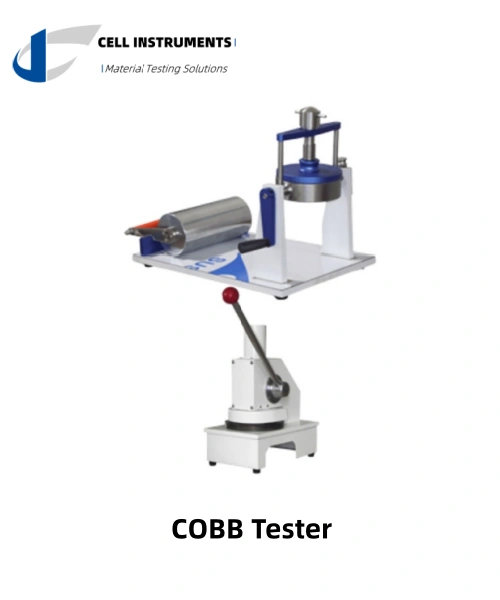
- Pengukuran digital yang akurat dari penyerapan air dalam g/m²
- Hasil yang konsisten dan dapat diulang dengan pengaruh operator yang minimal
- Antarmuka yang mudah digunakan untuk pengaturan dan pengujian yang cepat
- Kepatuhan terhadap ISO 535 standar
- Cocok untuk penelitian laboratorium dan QA produksi
Penguji ini membantu tim kontrol kualitas memastikan bahwa kertas blotting memenuhi spesifikasi kinerja yang diperlukan, mengurangi cacat produk dan keluhan pelanggan.
Memastikan Kualitas dalam Produksi
Pengujian Cobb bukan hanya alat laboratorium tetapi juga merupakan bagian penting dari kontrol kualitas produksi. Menerapkan uji daya serap air rutin memungkinkan produsen untuk melakukannya:
- Mendeteksi variasi dalam kumpulan kertas secara dini
- Menyesuaikan proses pelapisan, penanggalan, atau komposisi serat
- Menjamin kinerja yang konsisten dalam aplikasi penggunaan akhir
 ID
ID  EN
EN  AR
AR  BG
BG  CS
CS  DA
DA  DE
DE  EL
EL  ES
ES  ET
ET  FI
FI  FR
FR  HU
HU  IT
IT  JA
JA  KO
KO  LT
LT  LV
LV  NB
NB  NL
NL  PL
PL  PT
PT  RO
RO  RU
RU  SK
SK  SL
SL  SV
SV  TR
TR  UK
UK